About me
Hello there! My name is Lucas Graboski. I’m upcoming graduate at the Haskayne School of Business and an aspiring ethics consultant. I’m pleased to share my first ethics case study: A Deep-Dive into Two Data-Driven Organizations Whose Ethical Leadership Practices Have Led Them Down Very Different Paths. Please take a readthrough and let me know what you think! I’d love to hear your feedback. Cheers!
Blog post #1: A Deep-Dive into Two Data-Driven Organizations Whose Ethical Leadership Practices Have Led Them Down Very Different Paths
My first blog post is an effort to analyze two very different organizations, one with a record of scandals and the other with a record of saving lives. I point out some things they could both work on and offer some recommendations. Hope you enjoy!
Introduction
Why do some organizations experience endless scandals and bad press, while others are loved and respected worldwide? In this paper, I will attempt to answer this question by analyzing two organizations on either end of the ethical spectrum through the lens of Ethical Leadership Theories: Cambridge Analytica, the disgraced data-driven political communications firm, and the Bill & Melinda Gates Foundation, the largest philanthropic foundation in the world. After discerning what sets the leadership in these two organizations apart, I will provide recommendations for both as to how they might be able to improve some of their ethical and leadership weaknesses. It is important to be able to distinguish between ethical and unethical organizations because as a future member of the workforce, I need to avoid finding myself employed at an unethical organization where I could be exposed to consequences that come along with it. I also need to be able to generate recommendations for unethical leadership practices so that wherever I end up, I can set a good example for those around me and be a good ethical leader.
Unethical Organization: Brief Overview of the Company

Cambridge Analytica (CA) filed for insolvency proceedings in 2018 (Lumb, 2019). However, subsequently the firm was essentially kept intact and continues to operate under the name Emerdata (Ghosh, 2018). As such, throughout this paper I will be referring to CA as though it still exists in the present.
CA was founded in 2013 as a data-driven political communications firm by Steve Bannon, Donald Trump’s former political strategist, and Robert Mercer, a conservative billionaire who invested in the company (Ghosh, 2018). Prior to the headline-making scandals that it experienced in 2018, it was a highly regarded firm who worked for multiple high-profile political campaigns, generally for right-leaning/conservative causes. Examples include the campaigns of Ted Cruz and Donald Trump for the presidency of the United States, and the campaign advocating for Britain to leave the EU (Brexit) (Mayer, 2018). The key players of the firm are: Alexander Nix, CEO (until 2018); Robert Mercer, founder; Steve Bannon, founder; SCL Group, owner; and Christopher Wylie, whistleblower. Prior to the scandal Alexander Nix had been invited to several conferences to speak about the ‘groundbreaking’ work that his company was doing. CA’s most widely advertised service is to combine psychographics, big data, and targeted advertising in order to influence voters to vote for the candidate that employs the firm (Nix, 2016). The first step of this process is to accumulate as much personal data about a voter as possible through “surveys” (more on its data collection methods later) (Nix, 2016). Once it has databases comprising of the personal data of millions of voters, it profiles voters using its psychographic model, the OCEAN model: Openness, Conscientiousness, Extraversion, Agreeableness, and Neuroticism (Nix, 2016). It profiles and segments voters by measuring the level to which they display each OCEAN personality trait (Nix, 2016). After segmenting customers according to their OCEAN traits, CA develops advertisements designed to trigger an emotional reaction for each type of voter personality (Nix, 2016). Examples include developing advertisements that utilize fear for voters with high neuroticism and conscientiousness, or advertisements that emphasize tradition for voters with low openness and high agreeableness (Nix, 2016). Once the advertisements are developed, based on their personal data, CA targets each type of voter with the most effective advertising medium for their profile; whether social media, television, email, etc. (Nix, 2016).
CA has been hired by many other political campaigns around the world to aid in influencing voters. In 2018, CA’s data collection methods came under scrutiny, as did the firm’s actions on behalf of campaigns that extended beyond data collection and voter influencing. These practices and actions were highly unethical and will be discussed in more detail in the next section.
Ethical Organization: Brief Overview of the Company
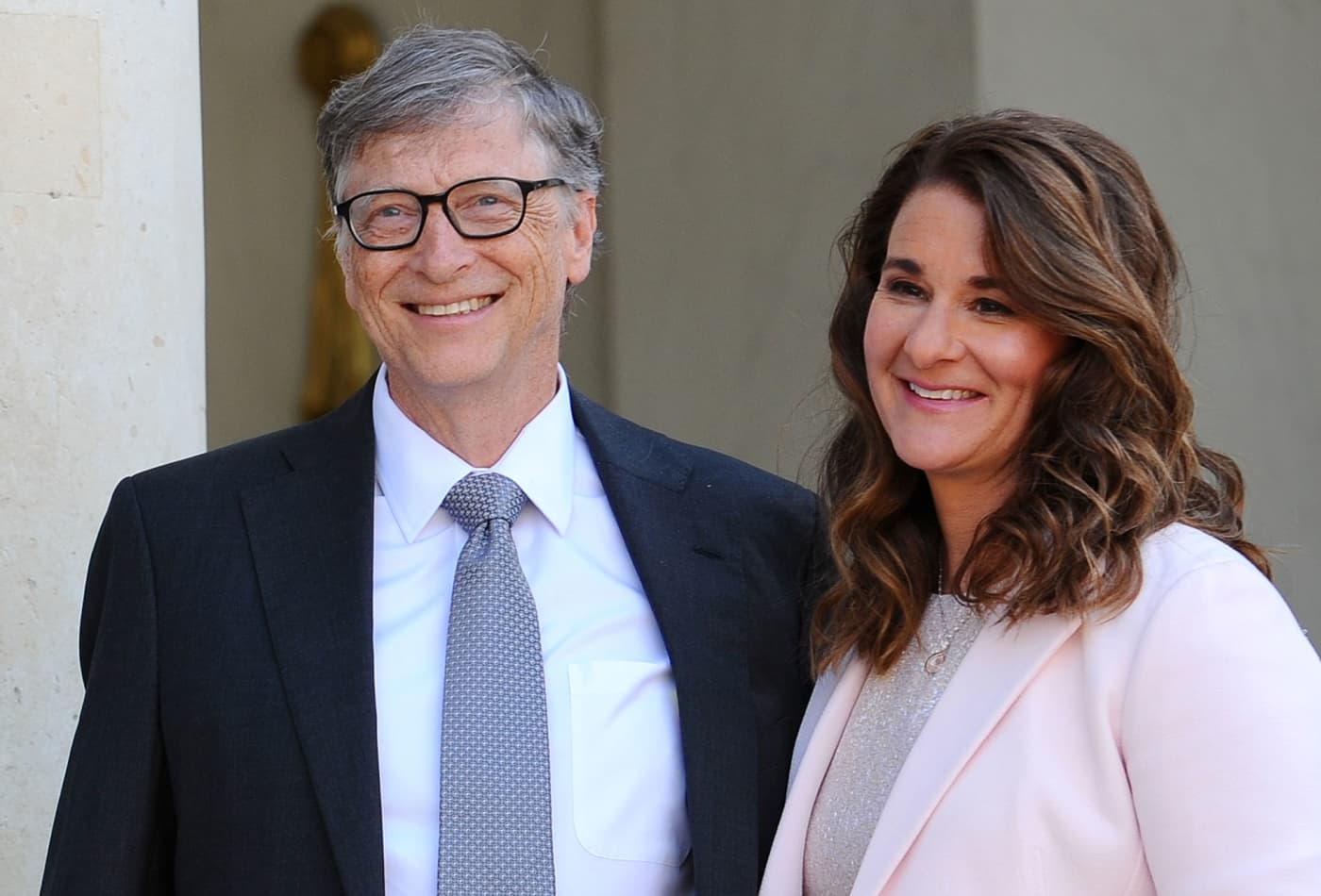
The Bill & Melinda Gates Foundation (BMGF) was founded in 2000 by Bill Gates, the co-founder and then-CEO of Microsoft, and Melinda Gates, a former General Manager at Microsoft and wife of Bill (gatesfoundation, 2019). At the time, Bill Gates was the wealthiest person in the world with a net worth of $60 billion USD (Perry, 2019). Today, his net worth is upwards of $110 billion USD and he is still one of the richest people in the world (Perry, 2019). Gates remained as CEO of Microsoft until 2008, at which point he stepped down in order to devote his full time and attention to the foundation (Gates, 2019). BMGF is the largest philanthropic organization in the world, with an endowment of over $50 billion USD (gatesfoundation, 2019). It is segmented into 5 main divisions: Global Health Division, which funds projects related to healthcare research and disease prevention; Global Development Division, which funds endeavors such as vaccine delivery and family planning; Global Growth & Opportunity Division, which emphasizes aiding the poor through agriculture, financial services, gender equality, water, and hygiene; US Program, which places an emphasis on equal opportunity education in the United States; and Global Policy & Advocacy Division, which is focused on advocacy efforts for the causes that BMGF supports (gatesfoundation, 2019). To date, Gates has already donated over $30 billion to the foundation (gatesfoundation, 2019). In 2006, Gates’ best friend, Warren Buffett, committed another $30 billion to the foundation, further enlarging its endowment (gatesfoundation, 2019).
The Foundation places a strong emphasis on data-driven solutions and makes a point of tackling some of the world’s most complex humanitarian problems, particularly ones that governments and industry cannot afford to pursue due to cost or risk (gatesfoundation, 2019). Some of the foundation’s most ambitious projects include its effort to eradicate Polio in Africa; its Reinvent the Toilet Challenge which funds the push to invent an efficient toilet that promotes hygiene in developing countries; its commissioning of a human waste-powered water treatment plant; and its funding of a supposedly safe nuclear power plant design that attempts to solve the world’s impending energy shortage (Netflix, 2019).
A few highlights of the organization’s accomplishments include: reaching 7.3 million people with HIV treatment; contributing to the virtual eradication of guinea worm; distributing 450 million mosquito nets to combat malaria; helping 12 million people receive treatment for tuberculosis; delivering vaccines to 500 million children & saving 7 million lives via the Vaccine Alliance; providing drought-resistant mais to 3 million households; delivering contraceptives to 120 million women; contributing to a 99% eradication of polio; helping to increase high school graduation in the US (by almost 30% in some cases); reducing family homelessness in Washington State by 35%; and funding the implementation of a tobacco tax in the Philippines which helped 43 million Filipinos get health insurance (Klara, 2016).
Unethical Organization: Comprehensive Review of the Topic

Ironically, Nix had given speeches proudly outlining CA’s voter-influencing process before the scandal even began. He even went so far as to claim that CA possessed 4,000-5,000 data points on every American voter, or 230 million people (Nix, 2016). While CA had been receiving limited press attention following the 2016 US presidential elections, the floodgates of the scandal truly opened in 2018 when Christopher Wylie, a Canadian data scientist and previous director of research at CA, blew the whistle. The main bombshell he revealed was that CA had taken the personal Facebook data of over 80 million users and used it for commercial purposes without their permission (Channel 4 News, 2018). CA used the data as the foundation of its OCEAN profiling strategy and used the results it produced from this strategy to generate algorithms that would allow it to attempt to influence the entire American voting population with targeted advertising. CA got the data from a Cambridge psychology professor named Aleksandr Kogan (Channel 4 News, 2018). Kogan had been given special permission from Facebook to collect the data of 270,000 Facebook users, all of whom consented to the collection via an app they downloaded which paid them a few dollars to fill out surveys and share their Facebook data (Channel 4 News, 2019). This data was meant to be used for research purposes only. However, CA persuaded Kogan to give them not only the data of those 250,000+ users, but also to collect all the personal data of those users’ friends as well without their knowledge (Channel 4 News, 2019). This meant that for every user of the app, CA could collect over 300 profiles on average (Channel 4 News, 2018). This is how 250,000+ turned into over 80 million (Channel 4 News, 2019). Wylie claims that CA spent $1 million conducting this collection, and that it only took a few months to complete (Channel 4 News, 2018). In addition to this, when Facebook found out that CA had done this, it asked that CA delete the data. CA kept the data but lied to Facebook, telling it that all the data had been deleted (Channel 4 News, 2018). After the news broke, CA tried several times to claim that everything that it had done was perfectly legal and standard industry practice (Constine, 2018).
A few days after the whistleblower story broke, Channel 4 News in Britain published a shocking segment. It had hired two Sri Lankan men to pose as prospective clients for CA and had arranged a series of meetings with Nix and Managing Director Mark Turnbull (Channel 4 News, 2018). The actors wore recording equipment and sat down with the two executives, acting as though they wanted to employ CA for their services in an upcoming election (Channel 4 News, 2018). The overtures that the executives made were shocking. They commenced by explaining how in their view, there is no point in conducting a political campaign with facts and logic, and that instead voters should be influenced through emotion (Channel 4 News, 2018). They explain that their main objective is to trigger people’s hopes and fears, and their research entails identifying which political advertisements will evoke the most hope or fear in a voter in a way that will benefit the candidate that CA is representing (Channel 4 News, 2018). They then begin boasting about how they played a central role in Uhura Kenyatta’s election campaign for the Kenyan presidency (Channel 4 News, 2018). This is particularly jarring as CA had publicly denied any involvement in Kenya’s elections (Channel 4 News, 2018). They expand by explaining that they often set up new legal entities to work with campaigns in order to keep their distance and appear to not be involved in the election (Channel 4 News, 2018). In their words, “it has to happen without people thinking it’s propaganda,” (Channel 4 News, 2018) “we have to be subtle.” (Channel 4 News, 2018). This strategy is employed so that voters don’t question the source of the advertising, making it more credible and allowing CA to retain anonymity as it deliberately attempts to influence the outcome of the election. Nix then takes it even further. He offers a number of services that are highly unethical and, in some cases, illegal. He explains that CA is happy to entrap political opponents, namely by attempting to bribe them, filming it, and posting it on the internet (Channel 4 News, 2018). He also says that CA can conduct research for any ‘skeletons in the closet’ of political opponents, hire ex-spies to pose as student researchers, and, most shockingly, that CA would be happy to hire prostitutes and send them to political opponents as another entrapment method (Channel 4 News, 2018). Nix caps it all off by explaining that the outcomes of these entrapment strategies “[…] don’t necessarily be true, as long as they’re believed.” (Channel 4 News, 2018)
Wylie offered some illuminating comments about Nix’s leadership approach and the culture that he fostered at CA. He called CA a “grossly unethical experiment” that “[plays] with the psychology of an entire country without their consent or awareness […] in the context of the democratic process.” (Channel 4 News, 2018) He also called it a “full-service propaganda machine.” (Channel 4 News, 2018). Of Nix, he said that he’s “not the easiest person to work for… He’s ambitious, he cares more; I think, about winning than what we actually did at the company. He’s an upper-class Etonian that expects people to follow him wherever he goes.” (Cadwalladr, 2018). When asked about whether they knew what they were doing was wrong, Wylie replied that “everyone knew we were wading into a grey area,” but that “if you don’t ask questions you won’t get an answer you won’t like.” (Cadwalladr, 2018)
Ethical Organization: Comprehensive Review of the Topic

In the Fall of 2001, Gates gave a speech about philanthropy that he remembers as “the day I knew what I wanted to do for the rest of my life.” (Gates, 2019). This was perhaps an odd comment as he was 46 years old at the time. At that point he was still the full-time CEO of Microsoft and his foundation was in its nascent form; he had been conducting research into different humanitarian causes but had not yet synthesized a clear vision for what he wanted the Foundation to be (Gates, 2019). What had triggered his interest in humanitarian causes was that he and Melinda had realized that many of the diseases that were killing millions of people and causing inequality in other parts of the world were easily treatable conditions such as diarrhea that had long been eradicated in the Western world (Gates, 2019). This was a revelation to him as he realized that it contradicted the commonly held view of the time, which was that no amount of money could ever solve any of the world’s health crises (Gates, 2019). This got him thinking that if somebody merely put time, effort, and resources into innovating solutions to these issues, the results could have a massively influential impact on the lives of millions of people (Gates, 2019). And so, it was these ideas that Gates was delivering in a speech to a group of business leaders at the invitation of his good friend Warren Buffett (Gates, 2019). He found himself getting tremendously excited about it as he spoke, and he received overwhelmingly positive feedback from his audience (Gates, 2019). It was this experience that spurred Gates to transition out of his role as a business leader and into his role as a philanthropist (Gates, 2019).
The credo of BMGF is “All Lives Have Equal Value.” (gatesfoundation, 2019). Indeed, all of the actions taken by the foundation are motivated by this simple statement. Bill and Melinda call themselves “impatient optimists working to reduce inequality,” (gatesfoundation, 2019) and as aforementioned, all of the projects that they fund attempt in some way to reduce inequality. What makes BMGF different however, is its appetite for risk. While there exist many foundations & NGO’s in the world, none are more willing to fund outlandish projects than BMGF. In their words, “Some of the projects we fund will fail. We not only accept that, we expect it – because we think an essential role of philanthropy is to make bets on promising solutions that governments and businesses can’t afford to make.” (gatesfoundation, 2019). This attitude towards risk stems from Gates’ prior career as a pioneer of the software industry. He was a risk-taker and an innovator as he grew Microsoft into the world’s most valuable company, and so he believes that a similar risk-taking and innovative approach applied to philanthropy could yield similarly monumental results.
However, for the Gates’, risk-taking does not equate ignorance or blind trust. The foundation has sued several companies who have misappropriated funds granted to them by the Foundation. A recent example of this is the Foundation’s lawsuit against Canadian biotech company PnuVax. It had received a $30 million USD grant to be used in R&D for a low-cost pneumonia vaccine, but the company instead used the funds to cover debts and personnel costs (Russell, 2019). The Gates’ have also created legal documents stipulating that all of the funds in the Foundation’s trust must be spent within 20 years of their deaths (gatesfoundation, 2019). Buffett has created similar documents which stipulate that his donations to the Foundation must be spent within 10 years of his death (gatesfoundation, 2019). There is a very good reason for these rules: it is to ensure that the foundation funds do not get misappropriated or used to create a bloated and bureaucratic entity that has more administration costs than grant-funding expenditures (gatesfoundation, 2019).
Gates also uses his platform and role as a philanthropist to publicly advocate for his causes and inspire others to be more philanthropic. In 2010 he and Buffett co-founded the Giving Pledge, a movement which recruited other billionaires to sign a pledge to donate most of their wealth to philanthropic causes (Giving Pledge, 2019). He has been able to recruit over 200 signatories with a combined net worth of over $1 trillion (Giving Pledge, 2019). He also regularly gives speeches and interviews about his work, and one of the divisions of his foundation was specifically created for advocacy purposes. Some of his most widely publicized moments were when he released mosquitos into the audience during a speech about malaria (TED-Ed, 2013), and when he drank water that had been processed straight out of human feces from the aforementioned self-sustaining waste processing unit which he funded (Gates, 2015).
Gates is not free of criticism, however. His foundation has been criticized for operating largely based on Gates’ beliefs regarding an issue, without any healthy conflict or debate (McNeil, 2008). Grantees have also lamented that at times the expectations of them were not made clear by the organization (Green, 2010). He has also received criticism for holding companies in his stock portfolio that contribute to climate change and inequality, some of the very issues that his foundation attempts to address (Piller, 2007).
Unethical Organization: Analysis of Results

Wylie talked about Nix being an “upper-class Etonian that expects people to follow him wherever he goes.” This is an example of him casting the shadow of privilege (Johnson, 2018), as he was born into a privileged life and he abuses this position. This privilege leads him to demonstrate a tremendous amount of hubris & narcissism (Johnson, 2018). Nix and his company also cast the shadow of mismanaged information (Johnson, 2018) consistently throughout this saga. CA mismanaged information when it violated the privacy of millions of people by stealing their personal data and using it for commercial gain. It also regularly lied about all aspects of what CA was doing with people’s information, such as saying that it had deleted all of the Facebook data when it hadn’t.
Why did Nix cast these shadows? The first reason is his battleground mentality (Johnson, 2018). This is evidenced by Wylie’s comment that Nix will do whatever it takes to win. It is also evidenced by his overtures to commit unethical and illegal acts to win the business of the Sri Lankan actors. It is entirely possible that all of his overtures were over-exaggerated sales tactics, but they are proof that he is prepared to do just about anything to win. Greed (Johnson, 2018)is another unhealthy motivation behind this win-at-all-costs mentality. On top of being a narcissist, Nix strongly demonstrates the characteristics of Machiavellianism (Johnson, 2018). Publicly, he maintained a virtuous public image (Johnson, 2018)by giving speeches about how exciting and innovative his company was, but in actuality was using whatever means necessary – ethical or unethical – to achieve [his] ends (Johnson, 2018). He had an end in mind, which was literally to win – to help his clients win their election – and if to achieve that he had to steal personal data, bombard people with propaganda, or bribe officials, then he was more than willing to do it. Chamorro-Premuzic writes that the individual gains of those displaying Machiavellian tendencies come at the expense of the group (Chamorro-Premuzic, 2015), and that was certainly the case in this instance. The true toll of the damage caused by CA may never be known.
Nix’s inability to recognize the serious privacy and ethical concerns arising from what his firm was doing also constitutes a failure of moral imagination (Johnson, 2018). Nix also displayed theories about how the world operates (Johnson, 2018). When stealing people’s data he failed to consider all the affected parties (Johnson, 2018), and thought it was a low-probability event (Johnson, 2018)that he would get caught, thinking that he could hide [his] unethical behavior from the public (Johnson, 2018). When he did get caught, he downplayed long-range consequences (Johnson, 2018)by claiming that what CA was doing was standard practice in the industry and that he was just trying to help his clients to the best of his ability. This is also an example of turning immoral conduct in moral conduct (Johnson, 2018)via moral justification (Johnson, 2018): that he is just trying to do the best job for his clients and using sales tactics to win business.
When Wylie stated that CA employees knew they were stepping into a grey area, but that they all chose to not ask questions they didn’t want to hear the answers to, this was a perfect example of moral disengagement (Johnson, 2018). When the employees were stealing the data and influencing voters, they turned off or deactivated their self-sanctions through the process of moral disengagement (Johnson, 2018), choosing to not ask questions so they wouldn’t hear answers that directly pulled at their moral compass.
CA’s practices also showed signs of an unethical climate. Nix’s win-at-all costs approach led the company to have a culture of pressure to maintain numbers (Johnson, 2018). This is evidenced by his boasting about the number of data points that CA had on every single American voter, despite the fact that these numbers were most likely an exaggeration. Other CEO’s that often exaggerate numbers, such as Elon Musk, also foster corporate cultures of pressure to maintain numbers (Johnson, 2018). Healy & Serfeim have written that in their research into companies who committed white collar crime, common thread was “a culture [where] making the numbers trumped any concerns about how targets were met.” (Healy & Serafeim, 2019). CA also had a bigger-than-life CEO (Johnson, 2018), or at least one that worked very hard to cultivate that image. His speeches evoke similarities to other bigger-than-life CEO’s like Elon Musk, where he presents himself as a young phenom working at the cutting edge of this pioneering industry. This in fact is another sign of an ethically compromised organization: innovation like no other (Johnson, 2018). There certainly must have been innovation for CA to win the business of such high-profile clients as Ted Cruz and Donald Trump, and this innovation all stemmed in fact from unethical practices. CA also very obviously had a weak board (Johnson, 2018). Its most influential figures, Robert Mercer and Steve Bannon, founded the firm with the very intent of conducting ethically questionable operations; intentionally attempting to influence voters using hope and fear to reach their political ends. With this sort of backdrop, it is hardly surprising that the firm went in the direction that it did.
One positive result to come out of the CA scandal was Andrew Wylie blowing the whistle. While it is true that he is not blameless in the affair, having been director of research when the company was founded, he eventually did practice intelligent disobedience (Johnson, 2018)by blowing the whistle. It took him several years, but eventually he took moral ownership (Johnson, 2018) for the part he played in creating CA and had the moral courage (Johnson, 2018)to speak publicly about it despite the potential consequences. Whistleblowers who fear retaliation are less likely to act (Near & Miceli, 1985), and given CA’s track record for subversive and unethical behavior, it certainly took a tremendous amount of moral courage by Wylie to take action.
Ethical Organization: Analysis of Results

Bill Gates exhibits many of the traits of a responsible leader (Johnson, 2018). In his particular case, his followers and stakeholders (Johnson, 2018)are the people in the world that he is trying to help, as well as those that he is trying to influence towards helping his causes. This aligns with Maak and Pless’ argument that “[responsible] leadership takes place in interaction with a multitude of followers and stakeholders inside and outside the corporation.” (Maak & Pless, 2006). The shared sense of meaning and purpose (Johnson, 2018)of the Foundation is that “all lives have equal value,” and the higher ethical level of motivation and commitment (Johnson, 2018) of the Foundation is that they are “impatient optimists working to reduce inequality.”
Gates has exhibited the role of the leader as steward (Johnson, 2018) through his lawsuits against companies that have misappropriated grant money. In doing so, he is protecting the values and resources (Johnson, 2018) of the Foundation and the funds that the grant recipient have been entrusted with (Johnson, 2018). He is making sure that the valuable resources of the Foundation only go towards enhancing its vision and mission. He is also acting as a good steward (Johnson, 2018) by stipulating that all the Foundation’s funds must be spent within 20 years of his and Melinda’s deaths. Again, this is Gates protecting the values and resources (Johnson, 2018) of the Foundation, ensuring that future leaders aren’t tempted to misappropriate the funds they have been entrusted with (Johnson, 2018).
Being prompted to take action due to disgust (Johnson, 2018) at the fact that many people in the world perish due to easily curable and preventative diseases, Gates exhibits the role of the leader as servant (Johnson, 2018). Being the richest man in the world, he had more reason than anyone to retire early and live the rest of his life relaxing in luxury. But this is not what he chose to do. Instead, he chose to dedicate his life towards focusing on the needs of (Johnson, 2018)the poor and putting the good of the community above selfish concerns (Johnson, 2018).
By spending so much of his time giving speeches and trying to get the message out about the vision of his Foundation, Gates exemplifies the leader as storyteller (Johnson, 2018). With appearances such as the one where he released mosquitos into the crowd or drank water that came from human feces, Gates is telling powerful stories that bring to life the organization’s vision and values (Johnson, 2018). Videos of him telling these powerful stories have received millions of views online, allowing him to communicate [his] visions about [his] organization’s social and environmental responsibilities (Johnson, 2018) to millions of people.
Perhaps most importantly, Gates exhibits the role of the leader as change agent (Johnson, 2018). His Foundation has made massive and measurable impacts on the world, as well as arguably an even larger but non-measurable impact on the world. Not only has his Foundation saved and helped treat millions, but he has also inspired other leaders to examine how they might exhibit responsible leadership and use their resources in a similar fashion to BMGF. A perfect example of this is the Giving Pledge. In this way, Gates shapes both the process and product of change (Johnson, 2018). A big way that Gates has been able to be such an effective change agent was by dealing with anxiety that always surrounds change efforts (Johnson, 2018). He has done this by being more than happy to fund highly risky projects while acknowledging their low chance of success, setting an example for others to begin wading into the same project space.
Insofar as criticism of the Foundation, the largest one is in regard to Gates’ largely unchallenged decision-making about which projects and causes will be funded. This is a symptom of groupthink (Johnson, 2018). Because the foundation is entirely funded through his wealth, he has ultimate say in every decision, and the rest of the members in the Foundation largely defer to his opinions. He also reads copiously, which most likely contributes to feelings of overconfidence (Johnson, 2018) when attempting to brainstorm a solution to a problem. The Foundation has also received feedback that grantees do not always feel that they have a clear idea of what is expected of them after receiving a grant. This is a symptom of poor communication of expectations (Johnson, 2018). Finally, the Foundation has been the subject of criticism for holding stocks in its portfolio of companies that are ethically questionable. This is an issue of moral focus (Johnson, 2018). From his point of view, Gates is merely intelligently investing the resources of the Foundation so that they can grow in value. However, this is in fact moral hypocrisy (Johnson, 2018). He is wanting to appear moral while avoiding the cost of actually being moral (Johnson, 2018).
Unethical Organization: Solutions & Recommendations

As mentioned, CA still exists and operates the same way as it did before, just under a different name. I have several recommendations for CA’s board that should be implemented in light of the explosive scandal it found itself in last year.
First of all, CA needs to look inward to address its motivations (Johnson, 2018). What it will find is that its motivations were flawed from the start, given that its founders started the company with ethically questionable motivations. My recommendation to mend this is for CA to strengthen its weak board (Johnson, 2018)issue by bringing on independent board members that don’t have conflicts of interest or personally benefit from the performance of the firm. These independent board members will help CA choose the right leaders and “measure and hold them accountable for workplace outcomes” (Pfeffer, 2015). When selecting a new CEO, the board needs to worry about the “credentials” (Pfeffer, 2015) of the candidate, looking at not only their previous job performance but their ethical track record as well.
Second, CA needs to work on its ethical sensitivity (Johnson, 2018). One of the reasons that it got into this position was its failure of moral imagination (Johnson, 2018)with regards to how its actions could impact others. The board needs to train both management and employees on taking the perspective of others (Johnson, 2018)so that they can foresee the consequences that would arise from committing acts such as taking the personal data of millions of people without their consent. Employees also need to be trained how to communicate effectively (Johnson, 2018) so that they do not end up in another situation where they are choosing to ‘not ask questions they don’t want the answers to.’ If they had been trained to effectively communicate with each other, more dialogue questioning the ethics of what they were doing would have been had.
Lastly, the board needs to work hard to create an ethical organizational climate (Johnson, 2018). The first way it can do that is by creating a zero-tolerance policy (Johnson, 2018). Implementing such a policy will aid the company in avoiding the gradual, slippery slope that is often associated with unethical practices, by cutting them off at the first sign of trouble. The company also needs to create an emphasis on process focus (Johnson, 2018) within the organization. With his Machiavellian tendencies, Nix often had little concern for the means to which CA achieved its ends, leading to an anomie (Johnson, 2018)problem in the organization. The board needs to emphasize concern for means (Johnson, 2018), in other words concern for how the organization achieves its goals (Johnson, 2018). In doing this, employees will stop focusing solely on hitting their targets at any cost, and instead be cognizant of the ethicality of the ways they are trying to achieve their goals.
Ethical Organization: Solutions & Recommendations

To resolve the issue of groupthink (Johnson, 2018) in the Foundation, Gates needs to work to encourage more minority opinions (Johnson, 2018) in his meetings. He is allowing his overconfidence (Johnson, 2018) to let him express a preference for a particular solution (Johnson, 2018). Instead, he needs to bring in more outsiders to challenge the group’s ideas (Johnson, 2018), as well as task people to play Devil’s Advocate (Johnson, 2018).
For the issues surrounding poor communication of expectations, BMGF needs to complete a review of the processes for communicating expectations to grantees. Chances are that the language that is used is high-level and strategic language. The Foundation needs to break down tasks into manageable segments (Johnson, 2018). It should also give grantees time to practice their skills (Johnson, 2018) and the opportunity to ask questions when needed.
Insofar as the issue of moral hypocrisy (Johnson, 2018), Gates needs to pay the cost of behaving morally (Johnson, 2018)and sell those stock positions. In this case, the lower return on investment is the price he must pay to create an ethically rewarding environment (Johnson, 2018) in his Foundation. While it comes at a cost, if he doesn’t sell the positions he risks putting in jeopardy the entire culture and credibility of his Foundation.
Conclusion

In summary, here I have examined two organizations. One exhibited all the hallmarks of an unethical organization, a company that if I had examined its inner workings with Ethical Leadership Theories years ago, I would have entirely predicted that it would end up in a massive scandal. The other is a model for responsible leadership, an organization that doesn’t measure profit as its return on investment, but rather the extent to which it is able to improve the lives of the individuals that it is trying to reach. I have learned that it is surprisingly easy to commit an unethical act, and even easier to let that act spiral and compound into many more acts. I have learned that being ethical leader requires purposeful, vigilant attention, and that even the most ethical leaders among us have their faults. As such, as an aspiring ethical leader, I have learned the importance of feedback mechanisms and controls that could alert me when I am inadvertently slipping onto an unethical path. This research has armed me with real-world examples of ethical and unethical leadership, and now it’s up to me to use this knowledge to my advantage as I transition out of the classroom and into the workforce.
Thanks so much for reading!
If you’ve made it this far, it probably means that you’ve been here for quite a while. I really appreciate it! Please feel free to comment and share your thoughts, and follow my blog if you would like to receive notifications when I post further content!
Thanks so much,
-Lucas
References
Bill & Melinda Gates Foundation. (2019). Retrieved from https://www.gatesfoundation.org/.
Cambridge Analytica – The Power of Big Data and Psychographics. (2016). Retrieved from https://www.youtube.com/watch?v=n8Dd5aVXLCc
Cambridge Analytica Uncovered: Secret filming reveals election tricks. (2018). Retrieved from https://www.youtube.com/watch?v=mpbeOCKZFfQ&t=431s
Cambridge Analytica: Whistleblower reveals data grab of 50 million Facebook profiles. (2018). Retrieved from https://www.youtube.com/watch?v=zb6-xz-geH4
Chamorro-Premuzic, T. (2015, November 4). Why Bad Guys Win at Work. Retrieved from https://hbr.org/2015/11/why-bad-guys-win-at-work.
Constine, J. (2018, April 4). Cambridge Analytica denies accessing data on 87M Facebook users…claims 30M. Retrieved from https://techcrunch.com/2018/04/04/cambridge- analytica-30-million/.
Gates, B. (2019, September 20). The day I knew what I wanted to do for the rest of my life. Retrieved from https://www.gatesnotes.com/About-Bill-Gates/The-day-I-knew-what-I- wanted-to-do-for-the-rest-of-my-life.
Ghosh, S. (2018, March 21). The power players behind Cambridge Analytica have set up a mysterious new data company. Retrieved from https://www.businessinsider.com.au/cambridge-analytica-executives-and-mercer-family- launch-emerdata-2018-3.
Green, E. (2010, June 16). Grantees tell Gates Foundation it’s not easy to work with. Retrieved from https://www.chalkbeat.org/posts/ny/2010/06/16/grantees-tell-gates-foundation-its- not-easy-to-work-with/.
Home – The Giving Pledge. (2019). Retrieved from https://givingpledge.org/.
Inside Bill’s Brain: Decoding Bill Gates. (2019). Retrieved from https://www.netflix.com/title/80184771
Janicki Omniprocessor. (2015). Retrieved from https://www.youtube.com/watch?v=bVzppWSIFU0
Johnson, C. E. (2018). Meeting the Ethical Challenges of Leadership: Casting Light or Shadow (6th ed.). Thousand Oaks, CA: Sage.
Klara, R. (2016, June 1). Infographic: A Look at the Millions of Lives Saved and Improved by the Gates Foundation. Retrieved from https://www.adweek.com/brand- marketing/infographic-look-millions-lives-saved-and-improved-gates-foundation- 171643/.
Lumb, D. (2019, July 19). Cambridge Analytica is shutting down following Facebook scandal. Retrieved from https://www.engadget.com/2018/05/02/cambridge-analytica-is-shutting- down-following-facebook-scandal/.
Mayer, J. (2018, November 18). New Evidence Emerges of Steve Bannon and Cambridge Analytica’s Role in Brexit. Retrieved from https://www.newyorker.com/news/news- desk/new-evidence-emerges-of-steve-bannon-and-cambridge-analyticas-role-in-brexit.
Mcneil, D. G. (2008, February 16). Gates Foundation’s Influence Criticized. Retrieved from https://www.nytimes.com/2008/02/16/science/16malaria.html.
Mosquitos, malaria and education – Bill Gates. (2013). Retrieved from https://www.youtube.com/watch?v=ZLkbWUNQbgk&t=626s
Near, J. P., & Miceli, M. P. (1985). Organizational Dissidence: The Case of Whistleblowing. Journal of Business Ethics. Retrieved from https://www.researchgate.net/profile/Marcia_Miceli/publication/256132631_Organizatio nal_Dissidence_The_Case_of_Whistle-Blowing/links/563256e908ae584878091f53.pdf
Perry, M. J. (2019, July 28). Chart of the day: The World’s Top Ten Billionaires, 2000 to 2019. Retrieved from https://nationalinterest.org/blog/buzz/chart-day-world’s-top-ten- billionaires-2000-2019-69766.
Piller, C. (2007). Report: Gates Foundation Causing Harm with the Same Money It Uses to Do Good. Retrieved from https://www.democracynow.org/2007/1/9/report_gates_foundation_causing_harm_with.
Pfeffer, J. (2015). Leadership BS: Fixing Workplaces and Careers One Truth at a Time.
Russell, A. (2019, March 9). Gates Foundation sues Canadian company over ‘misuse’ of $30M grant to develop pneumonia vaccine. Retrieved from https://globalnews.ca/news/5035009/gates- foundation-sues-canadian-company-over- misuse-of-30m-grant-to-develop-pneumonia-vaccine/.
Serafeim, P. H. G., Soltes, E., White, M. J., & Harvard Business Review Staff. (2019, June 18). White-Collar Crime. Retrieved from https://hbr.org/2019/07/white-collar-crime.
Follow My Blog
Get new content delivered directly to your inbox.
 Lucas Graboski - Ethics Consulting